Foot Fault
Minor · 8.1.1Striking the ball with any part of the body outside your quadrant.
- 1stWarning.
- 2ndOffending team loses 1 point.
- 3rdPlayer eliminated. Opponents score 1. Standard rotation.
 ™
Get on the Grid
™
Get on the Grid
Official rules · 2026 Edition
Two teams. Four quadrants. One ball. A plain-language summary of the Official Rulebook: the Grid, the serve, rotation, scoring, every foul and how a match is officiated.
01 · Overview
Gridball is played on the Grid, a 24 × 24-foot square divided into four 12-foot quadrants: Prime, Major, Minor and Entry. Each team has two players on the Grid, one in each of two quadrants, so four players are in play at once (Rulebook 2.4).
The Prime player serves. When the ball bounces in your quadrant, you must return it into another quadrant after one bounce. Miss, and you are eliminated: the other team scores, the players below your quadrant move up the Z-path, and your team’s Next In player enters at Entry. Then Prime serves again.
Outscore the other team over four 16-minute quarters (Rulebook 2.3). Points come from Eliminations, and from holding Major (a Grid Hold) or Prime (a Gridlock) while four rounds end. A tie after the fourth quarter goes to sudden-death overtime.
Where things stand: the first NGL playtest is being planned and no league match has been played yet. You can play pickup Gridball today with a playground ball and tape or chalk. The league-play standards below describe how sanctioned NGL matches are set up.
02 · The Grid
Quadrants are spaces on the court, not player positions. Every player can expect to play all four as the rotation moves them along (Rulebook 4.2).
A solid outer boundary and two quadrant lines, 1-foot service lines in Prime, a 2-foot center circle for the coin toss, and each quadrant labeled by name (3.1.4). Keep at least 5 feet clear on every side; official NGL venues need 10 feet (3.1.5).
Before the match, the home captain calls the coin toss. The winner chooses whether to hold Grid Advantage in the first half (Quarters 1–2) or the second (Quarters 3–4); the other team holds it in the other half. At the start of that half, the Grid Advantage team’s two Starters take Prime and Major and the opponents take Minor and Entry. Quarters 2 and 4 carry on from where the previous quarter ended (2.5).
03 · Teams & roster
Each team’s Next In player waits in its Next In Box, a marked 4 × 4 ft area on the Major–Entry side, level with Entry. Whoever is in the box is the Next In player. The coach may swap them at any dead ball until the Officials Table says “Table set”; then it is locked until the round ends (4.4, 4.4.2).
When a teammate is eliminated, the Next In player walks straight from the box into Entry and the coach sends a new one to the box. An empty box when the table is ready, or a slow entry, is Time Wasting (4.3.2, 8.1.2).
The two players a coach names to start a half in Prime and Major when their team holds Grid Advantage. The Head Officiator must be told before that half (4.2.2).
04 · Equipment
Pickup Gridball needs almost nothing. Sanctioned league play adds a specified ball, a hardwood court, kit standards and a match-day setup around the Grid.
Pickup play
The two-page Quick Play Guide covers setting up a first game.
League play
05 · Match structure
The clock runs only while a round is in play. It starts with each Prime serve and stops at every Elimination, timeout, challenge and official stoppage (5.1).
Time running out mid-rally: the rally is played to its end. An Elimination, and any award it completes, counts. No new round begins (5.1.1).
Called only between rounds: after an Elimination and before the next Prime serve (5.3). Unused timeouts carry through the match, subject to the limit of two per quarter.
A tie after the fourth quarter goes to sudden-death overtime, with no time limit. Overtime continues the fourth quarter from its final Grid position: the player in Prime serves, with no reset and no new lineup (5.2).
Grid Hold and Gridlock counts and foul counts carry over; only the clock does not. Challenges do not reset. The first team to lead by 2 points in total score wins.
06 · The serve
A serve that does not bounce in Prime, does not reach an opponent’s quadrant, or is made overhand is an Illegal Serve. It is penalized on a warning ladder, not by an automatic Elimination (6.1.1, 8.2.2). See the penalties.
At the start of each half, the Grid Advantage team has the opening serve. After that the serve follows the rotation.
07 · Rallies & eliminations
A round starts with the Prime serve and ends only at an Elimination. Fouls, stoppages, timeouts and replays do not end it (7.3).
Restart after a foul that eliminates no one: the round continues. The ball is re-served from Prime and no counts change (6.6.1).
08 · The Z-rotation
Example (Rulebook 12.2, Scenario 1)
Team A holds Prime and Major; Team B holds Minor and Entry. Team B’s Minor player fails to return the serve and is eliminated. Team A scores 1. Team B’s Entry player, the only one below the vacancy, moves up to Minor. Team A’s players are above it and stay. Team B’s Next In player enters at Entry, and Team A’s Prime player serves again.
09 · Scoring
The scorekeeper tracks counts and the Head Officiator signals each award; players and coaches are expected to track their own (7.2.2).
10 · Fouls & penalties
Each foul has a ladder: first offense, second, third. How the ladders apply (Rulebook 8):
Striking the ball with any part of the body outside your quadrant.
Missing the 10-second serve clock, an empty Next In Box when the table is ready, a slow entry at Entry, or any needless delay to play.
Striking the ball twice in a row before it reaches another quadrant.
A serve that does not bounce in Prime, does not reach an opponent’s quadrant, or is made overhand.
Aggression, taunting, disrespectful gestures or verbal abuse toward opponents, officials or spectators. Arguing a call outside the challenge process counts (9.1.2).
Intentionally obstructing an opponent’s ability to play the ball or move within their quadrant. Talking to your own partner is always allowed, decoy calls included; words aimed at an opponent while the ball is in play, a line or out call on a ball going to the opponents, or imitating an Officiator’s whistle or call is Deliberate Interference.
Equipment that does not meet the player kit rules (3.3).
A broken shoe or other equipment failure that disrupts play. Ball problems are handled under 3.2.2.
An ejected player leaves at once and cannot return that match. If they were on the Grid, they are removed as an Elimination with standard rotation and the Next In player enters; no points are awarded for the ejection itself. The Head Officiator reports every ejection to the Commissioner within 24 hours (8.5.1).
A team forfeits before the match if it cannot field 7 eligible players, and during it if it drops below 2. A forfeit counts as a win and a loss in the standings and does not affect either team’s point differential (8.5.2).
11 · Officiating
Every match has four Officiators, each standing 2–3 feet outside the midpoint of one side of the Grid. One is named Head Officiator before the match (Rulebook 9.1, 9.2.1).
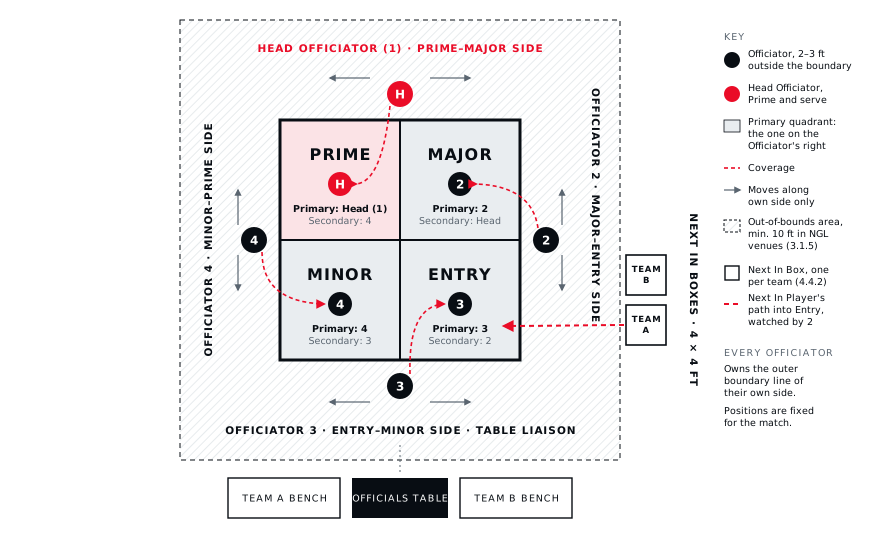
Each Officiator owns the outer boundary line on their side and one primary quadrant: the one on their right as they face the court. The Officiator on the other side touching that quadrant is its secondary and backs them up.
| Officiator | Side | Primary | Secondary |
|---|---|---|---|
| 1 Head | Prime–Major | Prime + serve | Major |
| 2 | Major–Entry | Major | Entry |
| 3 Table liaison | Entry–Minor | Entry | Minor |
| 4 | Minor–Prime | Minor | Prime + serve |
All four Officiators use the same 19 official signals (Rulebook 12.3). Eight you will see most:
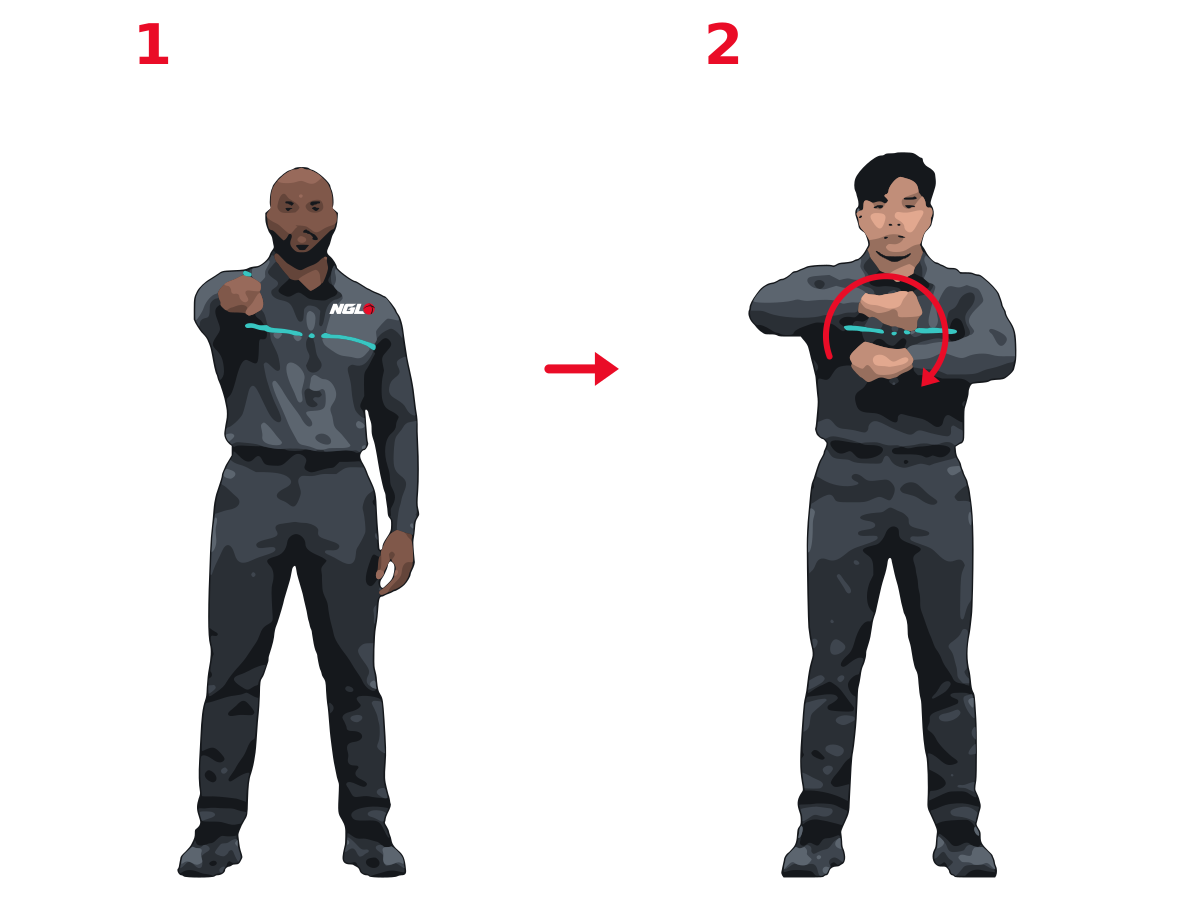
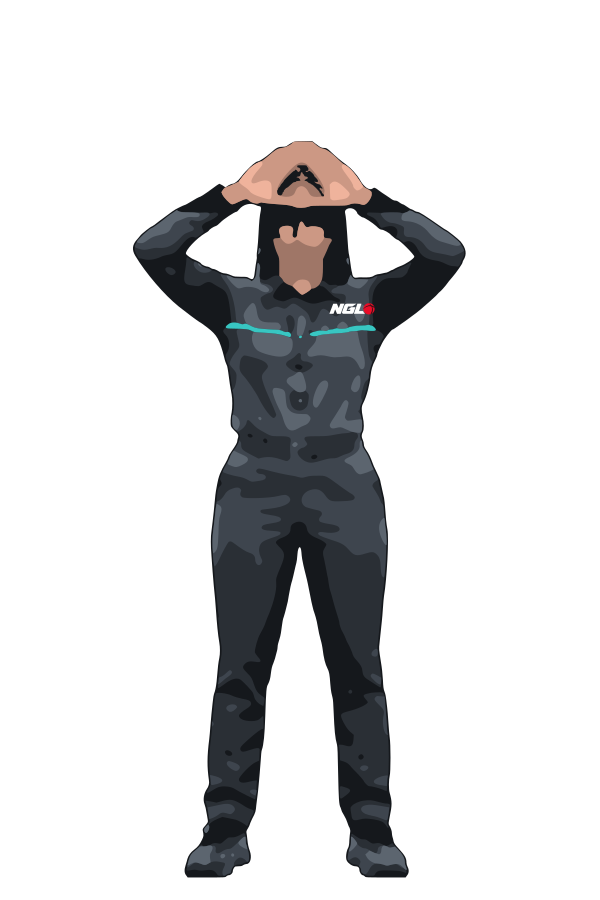
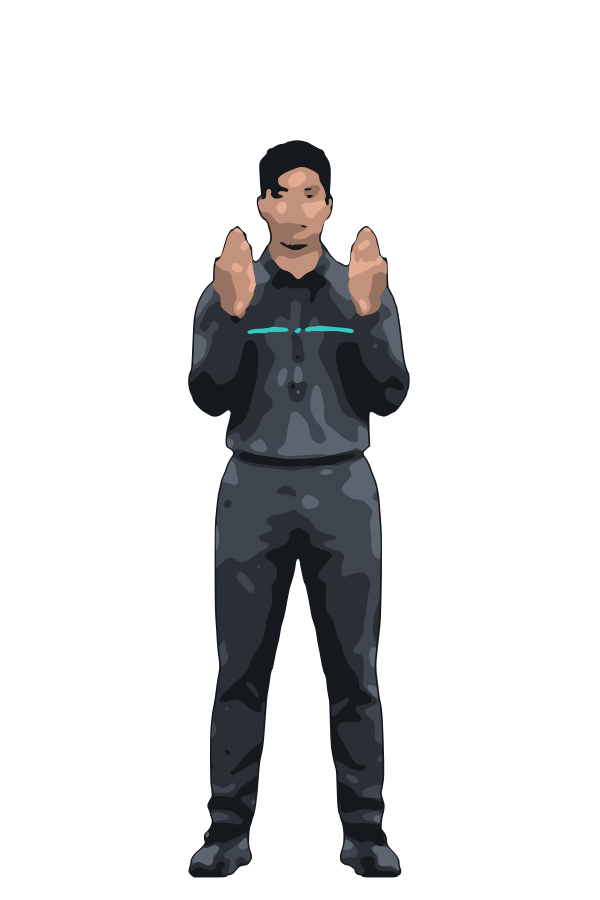
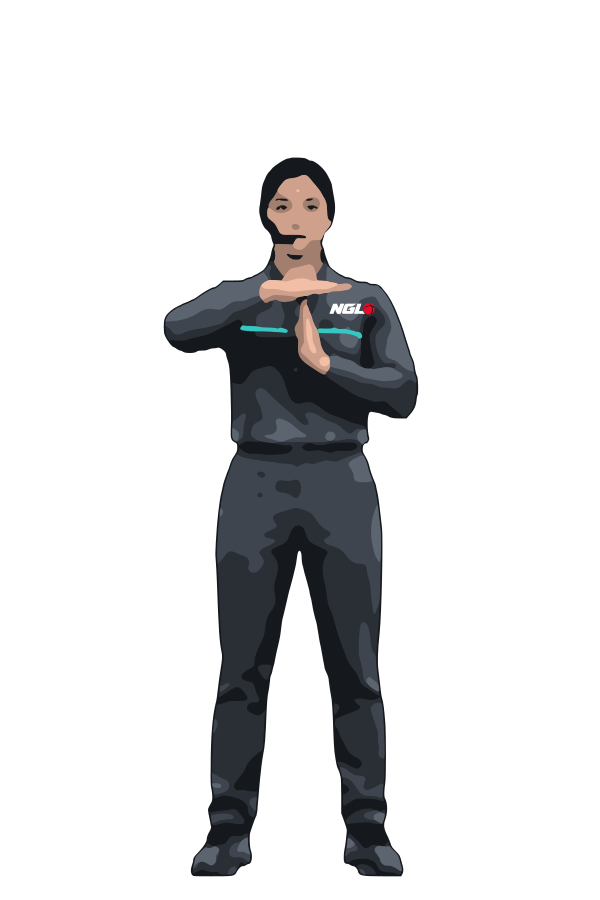
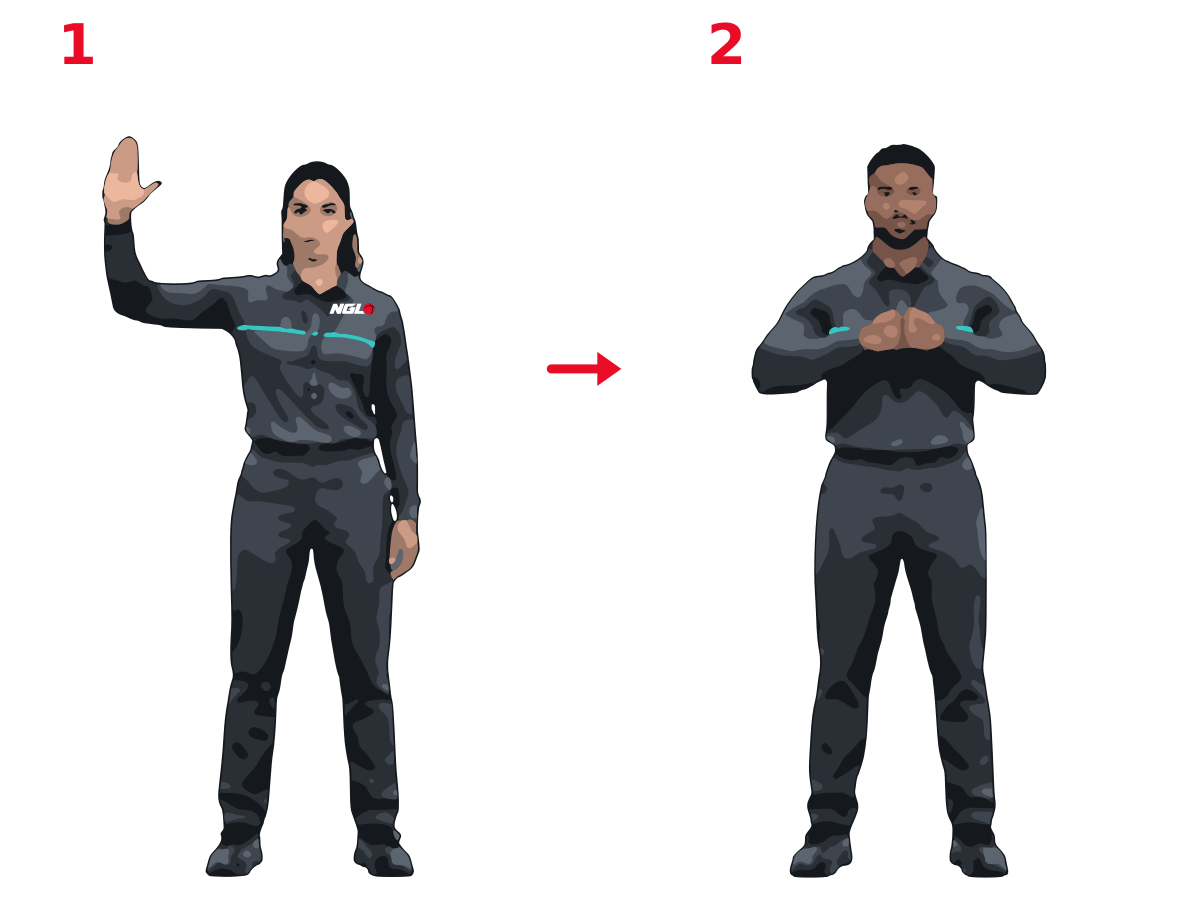
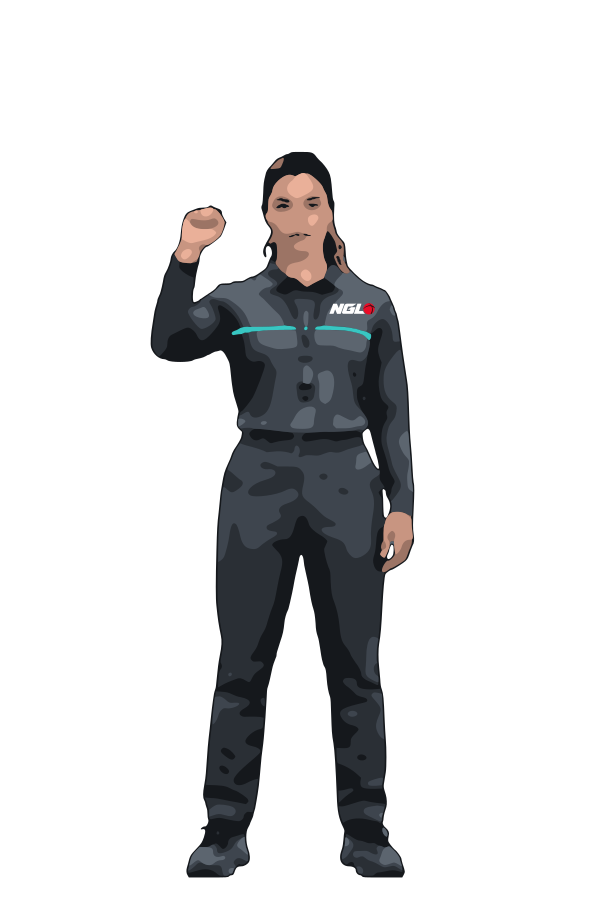
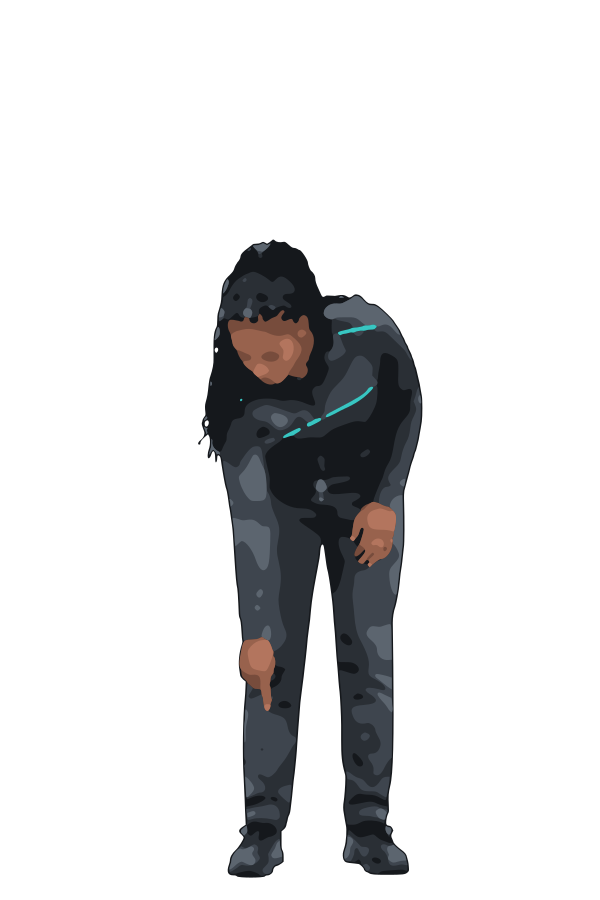
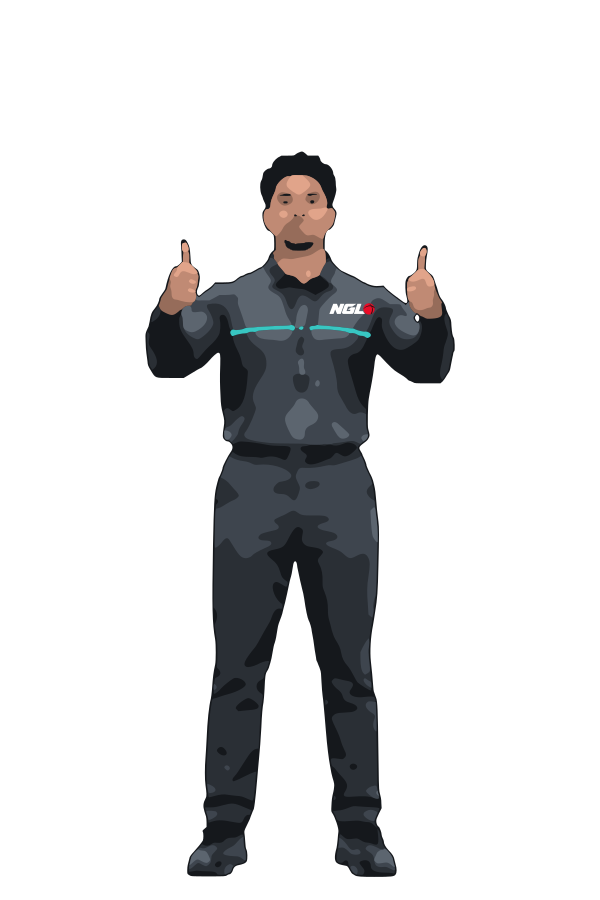
Illustrations · not real Officiators
All 19 signals are in the Game Officials Handbook.
The Head Coach may challenge an Elimination, scoring event or foul by raising a clenched fist within 15 seconds of the play. Each team has 2 challenges per half, and needs at least one timeout left to challenge (9.3.1, 12.4).
Where replay is available, the Head Officiator reviews footage and rules within 60 seconds. Otherwise all four Officiators vote and the Head Officiator breaks a tie. The decision is final. Only the misapplication of a rule, never a judgement call, may be protested afterwards (9.3.2, 9.3.3).
The Head Officiator stops play for any injury (12.6).
12 · Glossary
13 · Official documents
For the scorecard: a worked example, filled in for one quarter, and the round log continuation sheet to print as many times as a match needs.
The first playtest is being planned.